As an Amazon Associate I earn from qualifying purchases. Some links below are affiliate links, which means I may earn a commission at no extra cost to you.
How Much Sunscreen Should You Actually Apply? (The Two-Finger Rule)
Most sunscreen routines break before the day even starts: a pea-size dab goes across the face, the neck gets whatever is left, and everyone leaves the house feeling protected. I have done the rushed mirror swipe while packing a bag for the car, then wondered later why my cheeks looked fine but my jawline and ears did not.
If nothing changes, another season becomes the same quiet pattern of buying decent SPF and still getting uneven protection from too-thin application.
This guide explains what the two-finger rule actually helps with, where it can mislead you, and how to build a sunscreen amount that fits real mornings without turning SPF into a math problem.
Are you using enough sunscreen for the skin that is exposed, or just enough to make the routine feel finished?
The short answer
For the face and neck, the two-finger rule is a useful starting point: squeeze sunscreen along the length of your index and middle finger, then apply that amount across your face, ears, neck, and any exposed upper chest. It is not perfect because finger length, product thickness, and skin area vary, but it is much better than treating sunscreen like a moisturizer dab.
For the body, think in sections instead of fingers. Use enough sunscreen to create an even layer over every exposed area, including shoulders, arms, hands, legs, feet, and the back of the neck. Most people under-apply because the right amount feels like more than a cosmetic product.
Use this quick guide:
| Area | Practical amount cue |
|---|---|
| Face only | About two finger lengths, adjusted for face size and formula |
| Face, ears, and neck | Two finger lengths plus a second pass where coverage looks thin |
| Neck and upper chest | Add a separate line or small pool, not leftovers |
| Arms and shoulders | Apply in sections until skin has an even, visible layer before rubbing in |
| Hands | Treat backs of hands like their own zone, especially when driving |
| Full outdoor body application | Use more product than feels cosmetic and reapply on schedule |
The exact measurement matters less than the habit: enough product, spread evenly, repeated when the day is long.
What the two-finger rule means
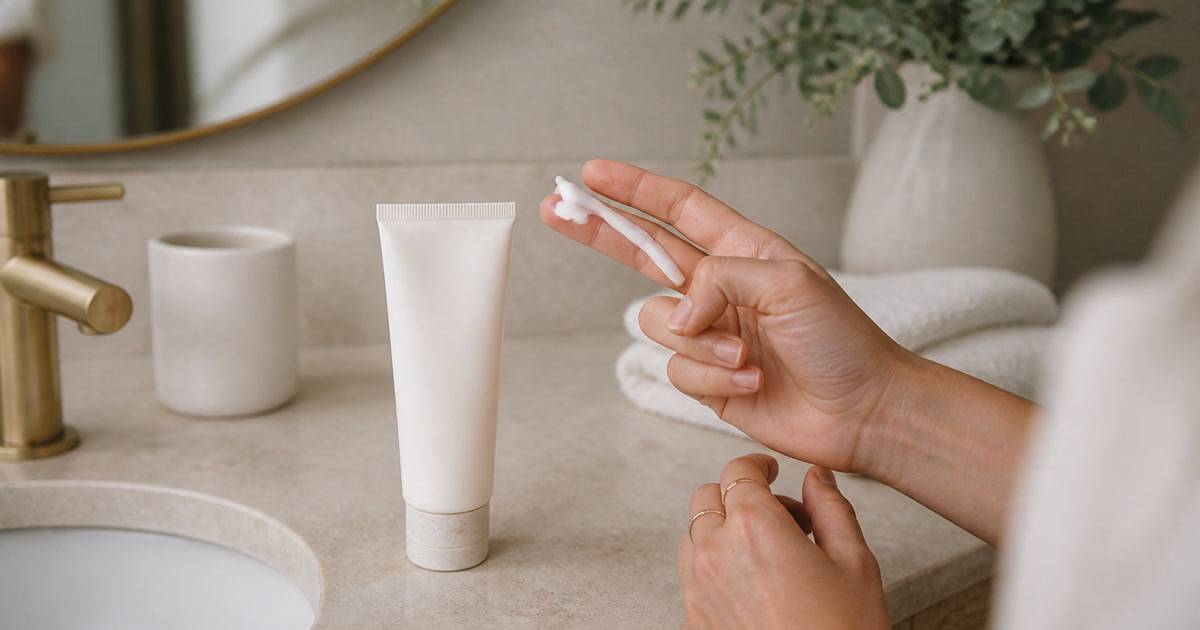
The two-finger rule is a simple way to estimate sunscreen for the face. Instead of guessing with a small dot, you squeeze sunscreen in two lines along two fingers. That visual cue helps people use more than they might otherwise apply.
It works best with lotions, creams, and fluids that dispense in a steady line. It works less cleanly with sticks, sprays, powders, and very runny formulas. If your sunscreen drips down your hand or comes out in thick blobs, treat the rule as a reminder to apply generously, not as a precise dose.
I like it because it is easy to remember on a school-run morning. Two fingers is faster than measuring spoons, and it pushes the routine away from “tiny dab and hope.”
Where the rule falls short
Two fingers is not a universal amount. A small face, larger face, beard area, high forehead, shaved head, long neck, or exposed chest changes the coverage area. Formula texture changes it too. A thick mineral sunscreen line can hold more product than a thin fluid line.
Common ways the rule goes wrong:
- Applying two fingers to the face but skipping ears and neck
- Using shorter fingertip lines instead of full finger-length lines
- Treating a stick swipe as equal to a lotion line
- Rubbing until the sunscreen disappears into missed patches
- Using the same amount for a tiny work-from-home exposure and a long outdoor day
- Forgetting reapplication after sweat, swimming, or towel drying
The two-finger rule is a starting point. Your exposed skin is the final checklist.
Face, ears, neck, and chest: the forgotten zones
Face sunscreen often stops at the jaw because that is where makeup, mirrors, and habit stop. The problem is that daily sun does not respect the jawline. Ears, neck, upper chest, and backs of hands are easy to forget when you are moving fast.
Try this order:
- Apply the first finger line across forehead, cheeks, nose, chin, and around the mouth.
- Apply the second finger line to ears, jawline, neck, and any exposed chest.
- Add a small extra pass to high points like cheekbones, nose, and ears.
- Let it settle before makeup, sunglasses, or a shirt collar rubs the layer around.
If that feels like too much at once, split it into two thinner passes. Two passes usually look better than one heavy smear.
How much sunscreen to use on the body
Body sunscreen needs a different mindset because fingers are not enough. Arms, shoulders, legs, feet, and the back of the neck take more product than people expect, especially when clothing shifts or a swimsuit exposes new edges.
Use zones:
- One pass for each arm, including shoulders and backs of hands
- One pass for each leg, including knees, ankles, and tops of feet
- One pass for chest and stomach if exposed
- One pass for back and shoulders, with help if you cannot reach
- Extra attention around straps, sleeves, watch bands, and sandal lines
For family pool mornings, I set the bottle on top of the towels instead of inside the bag. It is a boring trick, but it makes the second application visible when everyone comes out of the water hungry and distracted.
How to apply enough without feeling greasy
The usual problem is not that sunscreen is impossible to wear. It is that the formula, amount, and layering do not match.
If the right amount feels greasy or pills, try:
| Problem | Adjustment |
|---|---|
| Sunscreen pills | Use fewer layers underneath and give moisturizer time to settle |
| Face looks shiny | Try a lighter fluid, gel, or soft-matte finish |
| Mineral SPF looks chalky | Apply in thin sections and test tinted options if white cast is the issue |
| Product stings around eyes | Keep it out of the lash line and compare eye-area comfort in reviews |
| Makeup slides | Let SPF set before foundation and use lighter pressure |
| Neck feels sticky | Use a separate body-friendly formula for neck and chest |
Do not solve an uncomfortable sunscreen by applying far less than you need. That just turns a bad texture match into a protection problem.
Verified sunscreen starting points
The verified ASINs below are starting points for comparing texture families. Check the current product page and label before buying because formulas, packaging, and water-resistance claims can change.
1. La Roche-Posay Anthelios Ultra-Light Fluid SPF 60
La Roche-Posay Anthelios Ultra-Light Fluid SPF 60 is a lightweight face fluid to consider if thick sunscreen makes you under-apply. Fluids can spread quickly, which helps on rushed mornings, but they also make it easy to use too little.
- Best for: daily face SPF, humid mornings, people who dislike heavy creams
- What to watch: thin texture needs deliberate, generous application
- How to use it: shake well, apply in two passes, and let it settle before makeup
- Shop: Check current price on Amazon
2. Supergoop! Unseen Sunscreen SPF 40
Supergoop! Unseen Sunscreen SPF 40 has a clear, primer-like feel. It can be useful when white cast is the reason you keep shrinking the amount, though the silicone-like slip is a preference call.
- Best for: clear finish, no white cast, makeup days
- What to watch: slippery texture can make people think they used more than they did
- How to use it: keep layers underneath simple and apply enough before blending
- Shop: Check current price on Amazon
3. Neutrogena Sheer Zinc Oxide Dry-Touch Mineral Sunscreen SPF 50
Neutrogena Sheer Zinc Oxide Dry-Touch Mineral Sunscreen SPF 50 is a mineral zinc oxide option for people who prefer mineral filters. The tradeoff is that zinc formulas can look more visible if you rush a large amount onto dry skin.
- Best for: mineral sunscreen preference, sensitive-feeling skin, body touchpoints
- What to watch: white cast and dry-looking patches
- How to use it: moisturize dry areas first, then apply in sections instead of one heavy layer
- Shop: Check current price on Amazon
4. Supergoop! Glow Stick SPF 50
Supergoop! Glow Stick SPF 50 is a portable stick option for small exposed zones like ears, cheekbones, nose, and hands. It is handy for a tote or console, but a stick should not be your only plan for full face and body coverage.
- Best for: small-area reapplication, bags, quick exposed spots
- What to watch: uneven coverage if you swipe too lightly
- How to use it: make several passes and rub in enough to avoid missed strips
- Shop: Check current price on Amazon
For broader comparison, browse face sunscreen on Amazon or body sunscreen SPF 50 on Amazon and read recent reviews for texture, eye sting, white cast, pilling, and whether people can apply a generous amount.
Sticks, sprays, and powders need extra care
The two-finger rule is built for lotions and creams. Other formats can help with reapplication, but they are easier to under-use.
With sticks:
- Swipe multiple times over the same area.
- Rub in if the label allows and coverage looks streaky.
- Use them for small zones, not your whole body on a long outdoor day.
With sprays:
- Follow label directions carefully.
- Spray enough to make skin visibly wet before rubbing in if directed.
- Avoid relying on sprays in wind where half the product misses your skin.
With powders:
- Treat them as a makeup-friendly helper, not your only sunscreen layer.
- Use a proper morning sunscreen underneath.
- Reapply with attention to missed zones, not just the center of the face.
Convenience only helps if the amount still covers your skin.
Reapplication amounts
Reapplication is not a tiny touch-up if you are outdoors for hours. The same exposed skin needs another real layer, especially after sweating, swimming, towel drying, or wiping your face.
A simple schedule:
- Apply generously before outdoor exposure.
- Reapply at least every two hours when staying outside.
- Reapply sooner after swimming, sweating, or towel drying.
- Add extra to ears, nose, shoulders, hands, and strap edges.
- Use hats, sunglasses, shade, and UPF clothing as backup protection.
I keep a stick for the small zones because it removes one excuse. For a pool, beach, or sports day, I still want a lotion bottle for the bigger second layer.
Quick checklist before you leave
Before you call sunscreen done, check:
- Did face, ears, neck, and exposed chest get product?
- Did backs of hands get their own layer?
- Did shoulders, feet, and strap edges get covered?
- Did you use enough to create an even layer before rubbing in?
- Is the bottle going with you if you will be outside longer than two hours?
- Do you have a reapplication format you will use when things get busy?
If the answer is no, the fix is usually one more pass, not a whole new routine.
The bottom line
The two-finger rule is a practical shortcut for using more sunscreen on your face, but it is not the whole sunscreen plan. Use it as a starting cue, then cover ears, neck, chest, hands, and body zones based on what is actually exposed.
Choose a texture you can apply generously, pack reapplication before the day gets chaotic, and do not let a comfortable tiny dab stand in for real coverage. Verified starting points include La Roche-Posay Anthelios Ultra-Light Fluid SPF 60, Supergoop! Unseen Sunscreen SPF 40, Neutrogena Sheer Zinc Oxide Dry-Touch Mineral Sunscreen SPF 50, and Supergoop! Glow Stick SPF 50.
Prices and availability change often - check the current price on Amazon.
As an Amazon Associate I earn from qualifying purchases.