As an Amazon Associate I earn from qualifying purchases. Some links below are affiliate links, which means I may earn a commission at no extra cost to you.
Best Sunscreen for the Ears: Daily SPF Without Forgetting the Edges
I have left the house with a finished-looking face, hair clipped up for pickup, and both ear rims still bare. Later the visor mirror showed the same pink outline that did not match my cheeks.
The trap is treating ears as hair, jewelry, or hat territory. Face sunscreen stops at the jaw. A clip or ponytail exposes the rims. Glasses and earrings make you skip the backs. A hat feels like enough even when the edges still sit in window light.
If nothing changes, another season becomes the same loop: tender rims, peeling after a weekend, then avoiding earrings because the skin never quite settled.
This guide names which sunscreen formats actually land on ears, how to cover the rims and backs without adding a body-care project, and what to skip so the step survives a two-minute morning.
When did you last put SPF on the rims and backs of your ears, not just on your face?
The short answer
The best sunscreen for the ears is a format you will put on the rims, the backs, and the little fold that faces the sky, not leftover face lotion you hope migrated sideways. A stick is the easiest weekday tool. A fluid still matters if you blend it past the hairline. A mineral option helps if the skin there stings easily.
This article is for shopping and routine habits, not diagnosis or treatment. If the skin on your ears cracks, weeps, swells, or changes quickly, pause product testing and ask a licensed professional. This is not advice about children’s sunscreen.
| If the missed spot is… | SPF lane to compare | Be careful with |
|---|---|---|
| Ear rims that burn first | Face stick | One swipe that never reaches the back |
| Backs of the ears with hair up | Stick plus a second pass | Assuming a ponytail counts as shade |
| Skin that stings with face fluid | Fragrance-aware mineral | Rubbing a thick layer into a tender fold |
| Glasses, hats, or earrings in the way | Apply, wait, then put accessories on | Skipping the spot the frames cover |
| A two-minute morning | Stick after face SPF | Starting a new ear serum the same week |
Why ear SPF gets skipped
Ears sit at the edge of the mirror. You check cheeks, forehead, and maybe the neck. Hair covers the rims while you get ready, then a clip, headband, or ponytail uncovers them in the car.
I notice this most on school mornings. Face SPF is on. Hair is up so it stays out of breakfast. The ears are suddenly the most exposed skin I have, and I do not think about them until they feel warm at pickup.
Hats help. They do not erase every gap around the brim. Earrings and glasses make people skip the backs so product does not smear. Face sunscreen on the cheeks does not travel to the rim.
Amount still matters on the face. See how much sunscreen to apply. For other forgotten edges, see sunscreen for hands and neck and best sunscreen for hairline and scalp. This article is the ear slice: rims, backs, and the fold that faces daylight.
If a stick already lives in your console, start with best sunscreen stick for face reapplication. If glasses smear product, that timing problem lives in best sunscreen that doesn’t transfer onto glasses.
What to read on the label
“For face and body” on a listing is marketing. The label is the test.
Useful clues:
- Broad spectrum. UVA and UVB both matter on a rim that sits in daylight and window light.
- A clear SPF number. SPF 30 or 50 is the usual shopping range. Higher is not a reason to apply less.
- Format. Stick, fluid, lotion, or mineral cream. Pick the one you can land on a small, curved surface.
- Water resistance. Useful if you sweat under a hat. Not a reason to skip a later pass.
- Fragrance. Scent near the ear canal can be harder to live with than the same scent on cheeks.
- Cast. White leftover is more obvious on the rim than on the forehead.
Do not treat “natural,” “for babies,” or “sensitive” on the front of the package as proof it will sit well on a tender ear. This article is not advice about children’s skin.
Best sunscreen shopping lanes for the ears
These are practical shopping lanes, not a medical ranking. Read the current listing and label before you buy.
1. Stick for rims, backs, and a car pass later
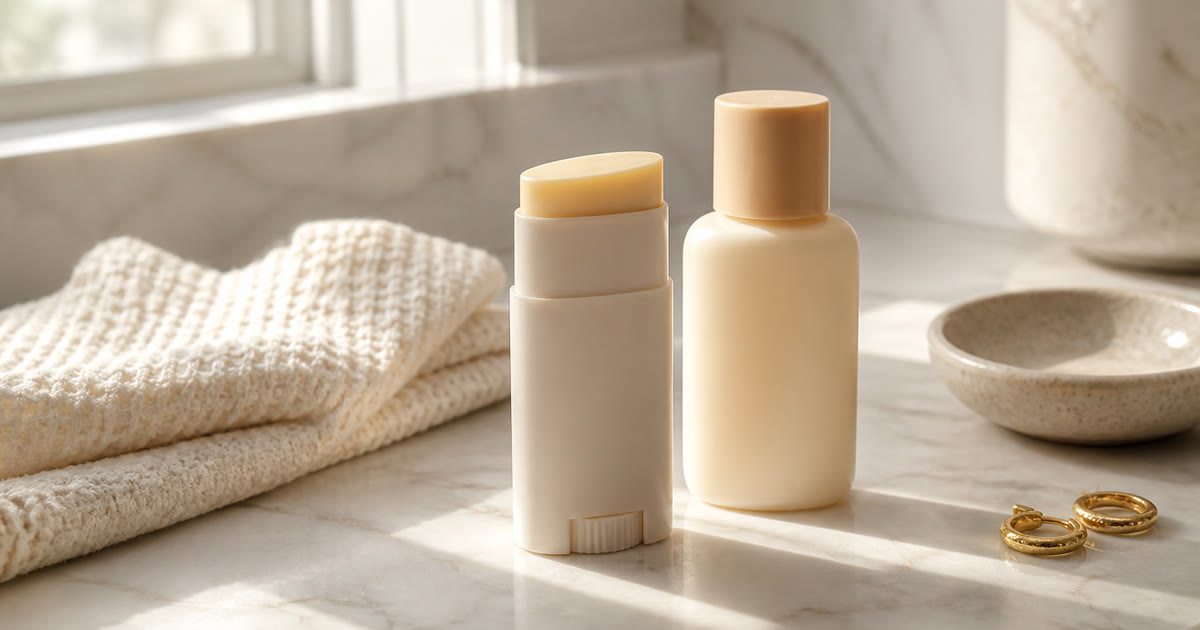
If lotion makes you skip the ears because it is messy, a verified stick is Supergoop! Glow Stick SPF 50.
-
Best for: ear rims, backs, the fold that faces the sky, a console pass after pickup
-
What to watch: one thin swipe as the whole morning layer; greasy residue on glasses arms
-
How to use it: expose the skin, swipe more than one pass on the rim and back, then press. Do not drag it through hair.
Compare sunscreen stick for ears SPF on Amazon if you want a matte or clear-feel option. Check the current Drug Facts panel.
2. Lightweight face fluid you actually blend onto the ears
The ears still need a real morning layer if you are not using a stick. A verified fluid is La Roche-Posay Anthelios Ultra-Light Fluid SPF 60.
- Best for: weekday face plus a careful blend onto the rims before hair goes up
- What to watch: stopping at the jaw; applying too little because it feels light
- Shop: Check current price on Amazon
If you want a clear-feel option that does not look like cream on the rim, a verified reference is Supergoop! Unseen Sunscreen SPF 40.
- Best for: no-makeup days, combination skin, people who wipe off white leftover
- What to watch: pilling if you layer too many products underneath; still missing the back of the ear
- Shop: Check current price on Amazon
For mixed-filter textures, see best hybrid sunscreen for combination skin. Cast-specific shopping lives in sunscreens with no white cast.
3. Mineral option if the ear skin feels reactive
If fluids sting along the rim or near earrings, a verified mineral reference is Neutrogena Sheer Zinc Oxide Dry-Touch Mineral Sunscreen SPF 50.
- Best for: sensitive-feeling ears, fragrance-aware shopping, first tests on intact skin
- What to watch: leftover cast on the rim; tightness if you skip moisturizer on dry edges
- Shop: Check current price on Amazon
Compare fragrance free mineral sunscreen stick for face zinc oxide on Amazon if a cream feels too heavy for a small area. Read the current Drug Facts panel. Do not treat the search phrase as a diagnosis.
For a broader sensitive-skin SPF map, see best mineral sunscreen for sensitive skin. If sting near the eyes is the bigger issue, that comparison lives in best sunscreen for sensitive eyes.
4. Body lotion only when the ears are part of a bigger exposed day
If shoulders, chest, and ears are all out, a body sunscreen can cover more skin than a face stick. Compare broad spectrum body sunscreen lotion SPF 50 on Amazon.
- Best for: weekends when more than the face is exposed
- What to watch: a greasy film that makes you skip the rims; treating body lotion as a reason to skip a later stick pass
- How to use it: cover ears while the hair is still up, then do the rest of the body
Face and body formulas are not automatically interchangeable. See body sunscreen vs face sunscreen. For chest-adjacent skin, best sunscreen for the chest keeps the extra zone simple.
5. A later stick pass when hats, hair, and glasses come off and on
Reapplication is where ear SPF usually dies. A stick in the console is easier than a lotion you will not put on in a parking lot.
Use the same verified stick after pickup, after a hat comes off, or after you take glasses off to clean them. See how often to reapply sunscreen. Window light still counts on a commute. See sunscreen for driving.
If you prefer a powder for a midday face refresh, keep a stick for the ears. Powder is a weak plan for the back of an ear. Powder shopping lives in best powder sunscreen for reapplication.
How this fits a short routine
Keep the order boring. Face first, then the edges hair and accessories hide.
- Cleanse as usual.
- Skip a new earring metal or a new ear serum while you test SPF.
- Face sunscreen in a real layer.
- Blend onto the rims, or follow with a stick on the rims and backs.
- Wait a minute before glasses, hats, or earrings go on.
- Stick later if you will be in daylight again, especially after hair goes up.
If cleanser is stripping the area around the ears before SPF, a verified gentle option is Cetaphil Gentle Skin Cleanser.
For dry edges at night, CeraVe Moisturizing Cream is a verified richer option. It is not sunscreen.
Driving with hair up does not pause daylight. Side windows still count.
Mistakes that make ear SPF less useful
- Stopping at the jaw. The rims still burn.
- Using a hat as sunscreen. Shade helps. Gaps around the brim still take light.
- Putting glasses and earrings on while SPF is wet. Product transfers, then those spots get less coverage.
- One decorative swipe. If you cannot see or feel product on the back of the ear, you probably missed it.
- Calling a stick the whole morning face layer. Use it for edges after a real face SPF, or apply enough stick to actually cover.
- Testing a new earring metal, a new fragrance, and a new SPF together. You will not know which step stung.
The smaller fix is often better: face SPF you already tolerate, then one extra stick pass on the ears.
A simple testing plan
- Choose one ear format: stick, fluid blend, or mineral cream.
- Read the current label for SPF, broad spectrum, and fragrance.
- Patch test on intact skin near the jaw if you are cautious.
- Use it as your only new SPF helper for several weekday mornings.
- Keep night products familiar. Do not add a new acid or retinoid in the same window.
- Watch for sting, tightness, flakes, smeared glasses, or a cast you will not wear.
- Continue only if you will actually put it on the rims and backs, not just near the hairline.
I keep a note in my phone because I will forget by Friday: product, whether I hit both ears, and whether the rims felt worse after pickup.
Quick shopping checklist
- Is it broad spectrum with a clear SPF number?
- Can I land it on a small, curved surface?
- Will the format survive a two-minute morning?
- Does leftover look acceptable on the rim?
- Am I still using a real face sunscreen, not only an ear helper?
- Will I wait before glasses, hats, or earrings go on?
- Will I stop and get professional advice if the skin cracks, weeps, or changes quickly?
If the answers point to one stick or fluid you will finish, you have a reasonable candidate. If the plan needs a new serum, a new perfume, and a new SPF to make sense, keep comparing.
The bottom line
The best sunscreen for the ears is the one you will put on the skin that actually shows when hair goes up, not the leftover on your fingertips after you do your face.
Start with one lane: a stick for rims and backs, plus the face fluid you already blend past the jaw. Keep the rest of the shelf familiar while you learn whether you will repeat it.
You do not need a separate ear-care shelf. You need SPF that reaches the edges the bathroom mirror does not check.
Prices and availability change often - check the current price on Amazon.
As an Amazon Associate I earn from qualifying purchases.